
National Records Request Dashboard

For confidentiality all wireframes have been altered and redacted of all real data.

Overview
About National Records Request Dashboard
This dashboard supports federal officials in submitting and managing large-scale data requests based on specific qualification criteria, such as geographic location or ZIP code. The platform tracks requests throughout their lifecycle, providing visibility into request status, progress, and outcomes while helping users manage complex, high-volume data workflows.
My Role
UX/ UI Designer
Project Durration
On going



Tools
Getting Started
Challenge
The request process evolved from inconsistent person to person email communication and a partially functioning legacy modal into a fully modernized request form experience. While the existing application met many compliance standards, usability gaps created friction for users. Through a complete redesign, I partnered closely with engineers and a primary user stakeholder to ensure critical requirements were preserved while creating a more intuitive and scalable workflow.
Solution
The solution was a fully redesigned request form that streamlined the submission process into a clear, scalable workflow while maintaining alignment with business and user needs. I introduced full Section 508 compliance standards, implemented consistent patterns from the design system to improve usability and development efficiency, and translated complex technical fields into more intuitive, learnable language to reduce user friction and improve form completion confidence.
Legacy

Modernized
Research
Heuristic Evaluation
The heuristic evaluation revealed opportunities to simplify the form, clarify its requirements, and address potential security considerations. These findings prompted additional questions for the client to validate which fields and functionality were essential, identify what could be removed or consolidated, and confirm any security risks associated with the redesign.
This evaluation helped establish a clear foundation for the redesign while giving the client early visibility into which elements of the existing experience would carry forward into the final UI.

User and Product Journey
The goals is to understand the user's experience, identify knowledge gaps, and define the key questions that needed to be answered before designing a solution.

The journey map revealed where users experienced friction, while the discovery questions highlighted gaps in the workflow and areas requiring clarification. Answering these questions ensured design decisions were based on validated requirements rather than assumptions.
Discovery
Site Map
The site map was created to understand the overall scale and complexity of the application before narrowing the product scope. By mapping the full ecosystem of features, workflows, and relationships, I was able to visualize the product as a whole and identify opportunities to prioritize, consolidate, or remove functionality. This created a foundation for making more informed decisions about the MVP and determining which features were essential to the core user experience.

User Roles and Features
Understanding the needs, responsibilities, and expectations associated with each user role was essential to defining the product experience. By mapping role-specific workflows and feature requirements, I was able to identify where experiences needed to differ and where consistency could be maintained across the application. Creating a seamless transition between roles was critical to supporting the working environment while building recognition and familiarity throughout the product. This foundation helped ensure that each role had access to the right functionality without creating unnecessary complexity or disrupting established workflows.


Design
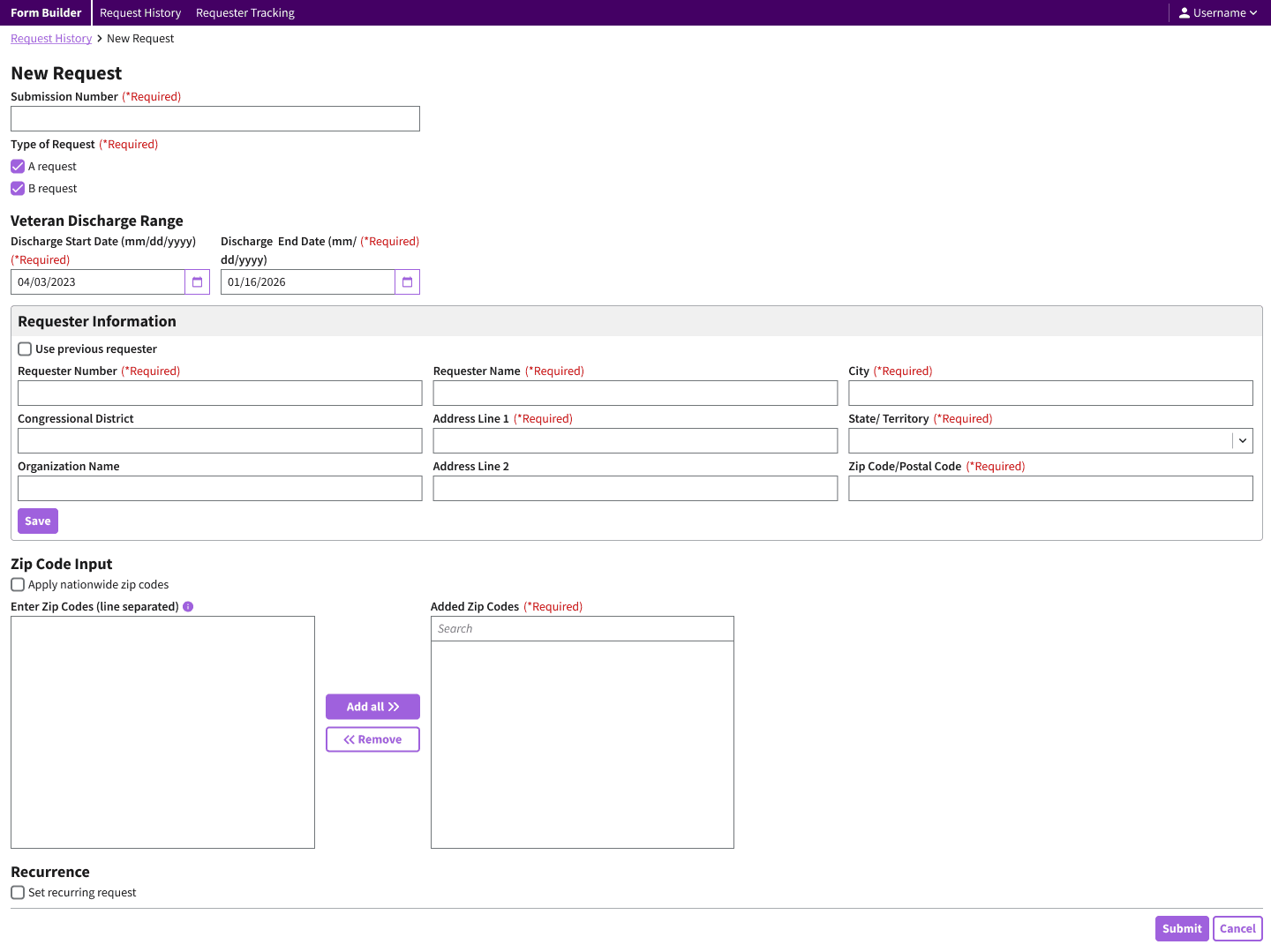
Request Form
I preserved essential functionality while introducing new capabilities driven by user and client needs. By consolidating these requirements into a unified workflow, I transformed a fragmented experience into a more cohesive and intuitive end-to-end process.
This approach enabled the product to evolve without sacrificing familiarity, while improving overall efficiency, usability, and scalability.

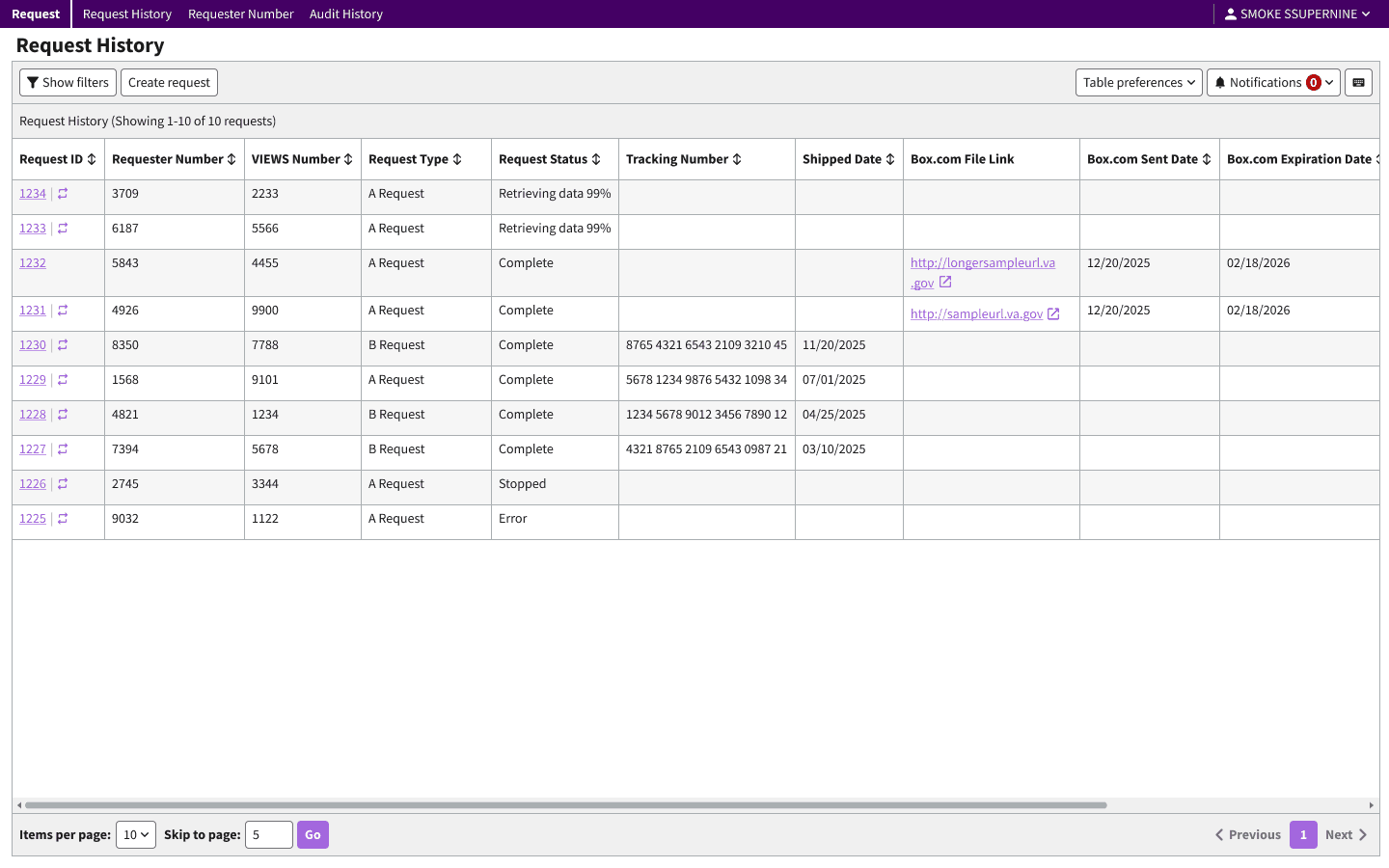
Home Page Request Tracking
Using an established design system and existing interaction patterns, I designed for the super admin with the most complex set of features. Throughout the process, I asked:
What would a user be looking for immediately after logging in?
What is the most logical order for presenting information?
How can the layout reduce the time it takes for both left-to-right readers and screen reader users to find what they need?
These questions helped guide the information hierarchy, prioritize content, and create a more efficient experience for users navigating the product.
